

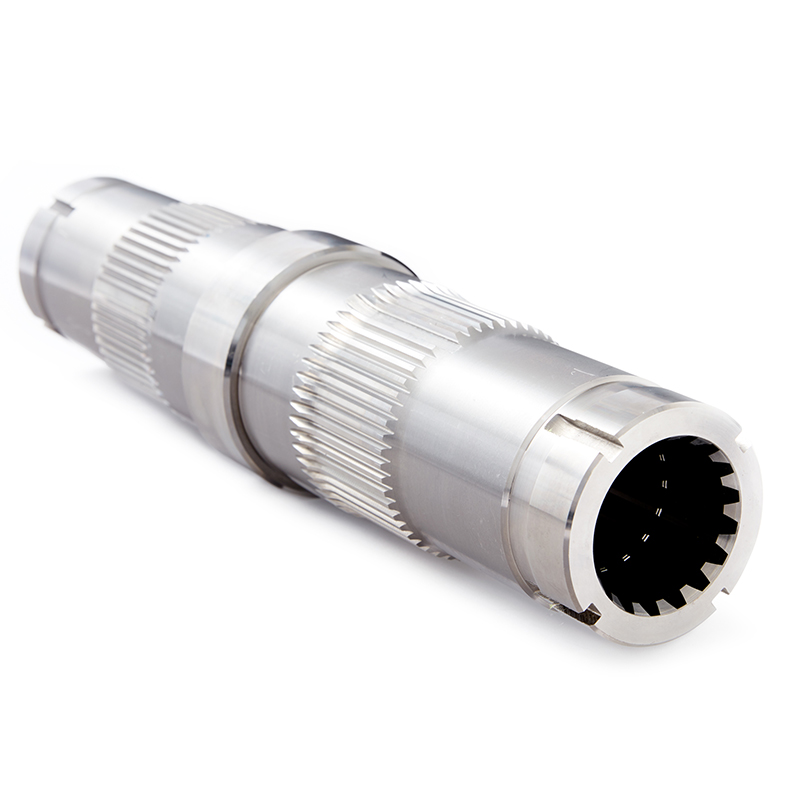
In the oil and gas industry, rotor shafts are critical components that endure high loads, high-speed rotations, and extreme environmental conditions. To ensure their long-term, stable operation, the durability and lifespan of these shafts are of paramount importance. While traditional machining methods can produce rotor shafts that meet basic requirements, hard turning technology has emerged as a highly effective solution, especially when faced with the need for high-strength materials and precision machining. By providing precision machining and controlling material structural changes, hard turning technology can significantly enhance the durability and service life of oil & gas rotor shafts, particularly in demanding high-load environments.
Advantages of Hard Turning Technology
Hard turning is a machining process that utilizes CNC machining components to cut high-hardness materials. Unlike traditional grinding, hard turning can improve machining efficiency while maintaining high precision and reducing costs. For oil & gas rotor shafts, which require both high strength and high precision, hard turning offers several key benefits. The technology allows for precise control of material removal, minimizing heat generation during cutting, thus reducing material distortion and surface defects.
In addition to improving precision, hard turning can significantly reduce tool wear and extend the service life of both the tools and the workpiece. As a result, hard turning provides more efficient and cost-effective machining compared to traditional methods.
Precision Machining: Improving Surface Quality and Accuracy
Hard Turning Machining Oil & Gas Rotor Shafts rotor shafts are typically made from high-strength alloy steels or other tough materials, which can present significant challenges during traditional machining processes. Hard turning technology addresses these challenges by precisely controlling cutting parameters, allowing the tool to cut through hard materials with minimal heat and pressure, thereby reducing the risk of material deformation.
This precise control of the cutting process improves both the surface finish and dimensional accuracy of rotor shafts. In high-precision applications, such as those found in the oil and gas industry, this level of control is crucial. The improved surface quality reduces surface roughness, increases wear resistance, and ensures that the shaft can operate efficiently under high-load conditions without premature failure.
Moreover, hard turning can achieve a better surface finish compared to grinding, resulting in a smoother surface that contributes to the rotor shaft's longevity. This is especially important in oil & gas applications where rotor shafts are subjected to constant friction and wear.
Controlling Material Structural Changes: Enhancing Durability
Another key advantage of hard turning lies in its ability to precisely control the microstructural changes in the material. The hardness and toughness of a material are critical factors in determining the durability of the rotor shaft. Traditional machining methods often generate excessive heat, leading to the annealing of the material or the formation of undesirable microstructures, which can reduce the overall strength and toughness of the material.Hard turning, on the other hand, optimizes cutting temperatures and forces to avoid excessive heat generation. This enables the material to retain its hardness and toughness, ensuring that the rotor shaft performs reliably under high-stress conditions. By controlling the hardness distribution in the surface and core of the material, hard turning enhances the shaft's ability to resist fatigue and corrosion.In oil & gas operations, where rotor shafts are exposed to harsh environments, the enhanced material properties resulting from hard turning contribute to improved durability and extended service life.
Increasing Load-Bearing Capacity: Ensuring Long-Term Stability
Hard Turning Machining Oil & Gas Rotor Shafts rotor shafts are typically subjected to extreme loads and rotating forces. Hard turning technology can significantly increase the shaft's load-bearing capacity by improving the material's strength and hardness distribution. By optimizing cutting parameters, such as speed, feed rate, and tool geometry, hard turning can create a more uniform hardened layer on the rotor shaft surface, making it capable of withstanding greater forces without premature failure.In addition, hard turning minimizes vibrations and thermal deformations during the machining process, which can reduce the risk of stress concentrations and the formation of cracks. This is particularly important in the oil and gas industry, where rotor shafts often face continuous, high-stress conditions over extended periods of time.By enhancing the load-bearing capacity of the rotor shaft, hard turning helps ensure long-term stability and reliability, even in the most demanding operational environments.
Hard turning technology provides a robust solution for improving the durability and lifespan of Hard Turning Machining Oil & Gas Rotor Shafts rotor shafts. Through precise machining, surface quality optimization, and control of material structural changes, hard turning enhances the performance of rotor shafts, enabling them to withstand high loads and extreme conditions for extended periods. The technology not only increases the strength and wear resistance of the rotor shafts but also ensures their stable operation under high stress, reducing the likelihood of failure.As the oil & gas industry continues to demand higher precision and reliability from its equipment, hard turning will play an increasingly important role in enhancing the durability and performance of critical components such as rotor shafts. By adopting hard turning technology, companies can significantly improve the longevity and efficiency of their equipment, reducing downtime and operational costs in the long run.