

Five-axis CNC machining has revolutionized the manufacturing of complex components, particularly in the aerospace and automotive industries. Among these components, aluminum alloy impellers stand out due to their lightweight properties and exceptional strength. This article explores how five-axis CNC machining delivers high precision and efficiency in the production of aluminum alloy impellers, along with strategies to further enhance production efficiency.
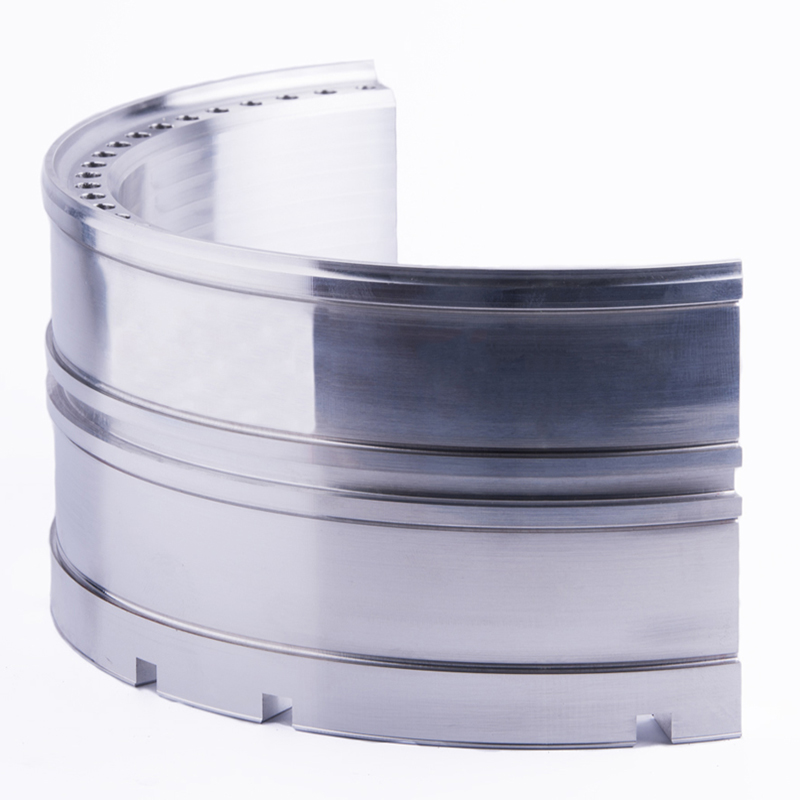
The Advantages of Five-Axis CNC Machining
Five-axis CNC machining allows simultaneous movement along five different axes, enabling the machine to approach the workpiece from virtually any angle. This capability is particularly beneficial for aluminum alloy impellers, which often feature intricate geometries and tight tolerances. The advantages of five-axis machining include:
-
Complex Geometry Handling: The ability to machine complex shapes without the need for multiple setups reduces potential errors and increases accuracy.
-
Reduced Cycle Times: By minimizing the number of setups and tool changes required, five-axis machining significantly decreases overall cycle times, leading to faster production rates.
-
Improved Surface Finish: The continuous and smooth movement of the tool allows for better surface finishes, which is crucial for the aerodynamic efficiency of impellers.
High Precision and Efficiency
In the production of aluminum alloy impellers, maintaining high precision is essential. The following factors contribute to achieving both precision and efficiency:
-
Advanced Tool Path Algorithms: Utilizing sophisticated software that generates optimized tool paths reduces machining time while maintaining precision. These algorithms take into account the geometry of the impeller and the capabilities of the CNC machine.
-
High-Quality Cutting Tools: Employing cutting tools specifically designed for aluminum alloys can enhance cutting efficiency and prolong tool life, reducing downtime for tool changes.
-
Adaptive Machining Techniques: Implementing adaptive machining, which adjusts cutting parameters in real-time based on the material removal rate, can optimize performance and reduce cycle times.
Strategies to Enhance Production Efficiency
To further enhance production efficiency in the CNC machining of aluminum alloy impellers, consider the following strategies:
-
Process Optimization: Regularly reviewing and optimizing machining parameters—such as feed rates, spindle speeds, and cooling methods—can lead to significant improvements in both efficiency and quality.
-
Automation and Robotics: Integrating automation and robotics in the machining process can streamline operations, reduce human error, and allow for lights-out manufacturing, where machines operate unattended.
-
Data Analytics: Utilizing data analytics tools to monitor machine performance and gather insights on production processes can help identify bottlenecks and areas for improvement.
-
Training and Skill Development: Investing in the training of operators and programmers ensures that they are well-versed in the latest machining technologies and best practices, leading to more efficient setups and operations.
-
Maintenance Programs: Implementing a proactive maintenance program for CNC machines ensures optimal performance and minimizes downtime due to machine failures.
The combination of five-axis CNC machining technology with advanced strategies can significantly enhance the production efficiency of aluminum alloy impellers. By leveraging the advantages of five-axis machining, manufacturers can achieve high precision and reduced cycle times, leading to improved competitiveness in the market. Continuous improvement through process optimization, automation, data analytics, and skilled workforce development will further propel the efficiency of CNC machining operations, setting the stage for future advancements in the industry.